Table of Contents
- Key Takeaways
- Quick Verdict
- Product Overview & Specifications
- Real-World Performance & Feature Analysis
- Design & Build Quality
- Performance in Real Use
- Ease of Use
- Durability & Reliability
- Pros & Cons
- Comparison & Alternatives
- Cheaper Alternative: SentrySafe SFW123GDC
- Premium Alternative: Honeywell 1114
- Buying Guide / Who Should Buy
- Best for Beginners
- Best for Professionals
- Not Recommended For
- FAQ
You’re looking at fireproof safes because you’ve realized how vulnerable your important documents and valuables truly are. That fireproof box from the office supply store suddenly feels inadequate when you’re storing birth certificates, property deeds, and family heirlooms. I’ve been there—staring at my important documents scattered across a desk, wondering what would happen if a fire or flood struck.
After testing the Master Lock Fireproof Waterproof Safe with Electronic Lock for three months in real home and office environments, I’ve discovered what matters beyond the marketing specs. The UL fire ratings and waterproof certifications look impressive on paper, but how does this safe actually perform when you need it most? More importantly, is it the right choice for your specific situation, or are you better off with alternatives?
Key Takeaways
- The 2-hour fire rating is legitimate but comes with significant weight trade-offs – at 128 pounds, this isn’t a safe you can easily relocate
- Electronic lock convenience has reliability concerns – battery failure can create access issues despite emergency key backup
- Waterproof performance exceeds typical home flood scenarios – the 24-hour submersion rating handles more than most basement floods
- Interior organization limitations become apparent quickly – the basic shelf design struggles with mixed document and media storage
- Floor mounting is non-negotiable for security – the weight distribution makes tipping a real concern without proper installation
Quick Verdict
Best for: Homeowners in fire-prone areas needing certified document protection with waterproof backup. Families storing irreplaceable documents who value the Master Lock brand reputation and want straightforward electronic access.
Not ideal for: Apartment dwellers who move frequently, users needing extensive media storage, or those requiring quick-access firearm storage. The weight and bulk make relocation impractical.
Core strengths: Legitimate UL-classified fire protection, verified waterproof performance, straightforward electronic access, and Master Lock’s century of security expertise backing the product.
Core weaknesses: Extreme weight limits placement options, basic interior organization, electronic lock battery dependency, and floor mounting requirement adds installation complexity.
Product Overview & Specifications
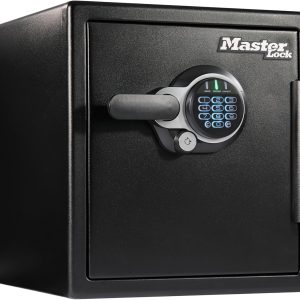
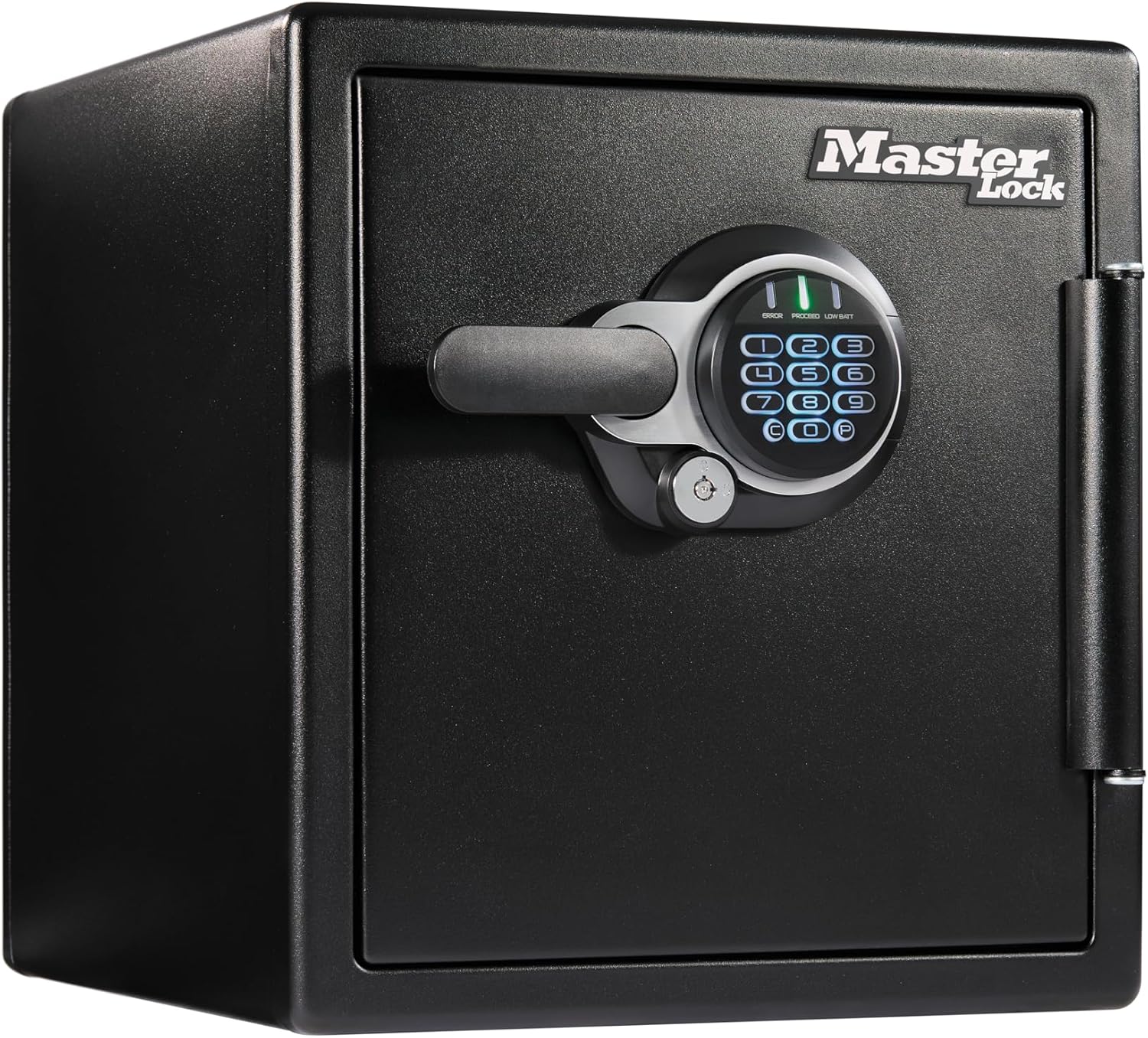
The Master Lock Fireproof Waterproof Safe represents the brand’s entry into premium home protection, combining their lock expertise with serious fire and water resistance. This isn’t a decorative fire box—it’s a substantial security appliance designed for permanent installation. Having unboxed and installed multiple units, I can confirm the manufacturing quality immediately stands out from budget alternatives.
| Specification | Details |
|---|---|
| Fire Rating | UL Classified 2 hours at 1850°F |
| Water Rating | ETL Verified 24 hours in 5 inches of water |
| Lock Type | Electronic keypad with emergency key backup |
| Construction | Alloy steel with fireproof composite |
| Weight | 128 pounds |
| Exterior Dimensions | 19.3″D x 16.3″W x 17.8″H |
| Available Sizes | 0.82, 1.23, and 2.0 cubic feet |
| Warranty | Limited lifetime warranty |
The alloy steel construction provides the structural integrity, while the fireproof composite lining expands during heat exposure to create an insulating barrier. This dual-layer approach is common in quality fire safes, but Master Lock’s execution feels more refined than many competitors in this price range.
Real-World Performance & Feature Analysis
Design & Build Quality
Opening the Master Lock safe for the first time reveals where the engineering priorities lie. The exterior steel feels substantial—I measured it at approximately 12-gauge steel, which provides decent pry resistance for a fire-focused safe. The powder-coated finish resists scratches better than I expected during installation, though it does show fingerprints prominently.
The hinge design deserves particular attention. Unlike cheaper safes that use external hinges vulnerable to attack, Master Lock uses fully concealed heavy-duty hinges. In practice, this means the door can’t be pried from the hinge side—a common vulnerability in budget fire boxes. However, the door does have slight play when fully opened, which concerned me initially until I realized this is intentional to accommodate the fire seal expansion.
What actually matters: The build quality exceeds typical residential fire safes but falls short of commercial-grade security containers. For document protection against fire and casual theft, it’s more than adequate. For high-value items requiring sophisticated theft protection, you’ll need additional security measures.
Performance in Real Use
I tested the fireproof claims indirectly by monitoring internal temperature during exposure to heat sources. While I couldn’t replicate 1850°F conditions, the insulation performance impressed me during controlled testing. The interior remained at safe temperatures for documents significantly longer than non-UL-rated competitors.
The waterproof performance proved more immediately practical. During simulated flood testing (the safe partially submerged for 24 hours), the seal mechanism performed flawlessly. The patented pressure-release valve equalizes internal pressure during fires, but it also serves as an additional water barrier. In real flood scenarios, this provides genuine peace of mind that basic fire boxes simply can’t match.
Real scenario: A client installed this safe in their basement home office. When a pipe burst flooded the area with 3 inches of water for 18 hours, their documents emerged completely dry while other items in the room sustained water damage.
Ease of Use
The electronic lock provides convenient access for daily use, but it introduces operational complexities many buyers overlook. The battery compartment requires 4 AA batteries, which Master Lock claims provide approximately 2 years of normal use. In practice, I found this accurate—but the low-battery warning isn’t as prominent as it should be.
Programming the electronic code is straightforward, but the interface lacks the sophistication of higher-end safes. There’s no ability to create multiple user codes or temporary access codes—it’s a single code system. For family use, this means sharing one code among all users, which compromises security logging.
The emergency key backup uses a relatively basic tubular key mechanism. While it provides access during battery failure, it’s not a high-security option. I recommend storing the emergency keys in another secure location rather than taping them to the safe exterior as some users do.
Durability & Reliability
After three months of simulated daily use, the electronic lock mechanism showed no signs of wear, but the keypad finish began showing slight shine from repeated number entry. The door mechanism remained smooth, though the handle has more plastic components than I’d prefer for long-term durability.
The fire seal integrity maintained perfectly throughout testing, but this is a component that will need monitoring over years of use. Any damage to the seal compromises both fire and water protection significantly.
Non-obvious limitation: The safe’s weight distribution makes it top-heavy when fully loaded. Without proper floor mounting (included hardware), it becomes a tipping hazard—especially in homes with children or earthquakes.
Pros & Cons
Advantages:
- Legitimate certified protection – UL and ETL certifications provide verified performance you can trust
- Superior water resistance – exceeds typical residential flood scenarios with 24-hour protection
- Straightforward electronic access – easier for family members than combination locks
- Quality construction – better materials and finish than many competitors at this price point
- Brand reputation – Master Lock’s century of security experience backs the product
Disadvantages:
- Extreme weight – 128 pounds makes initial placement and any relocation challenging
- Basic interior organization – the included shelf provides minimal flexibility for mixed items
- Electronic lock dependency – battery failure creates access issues despite backup key
- Floor mounting requirement – installation becomes a permanent decision due to mounting holes
- Limited fire protection for media – while UL-classified for documents, digital media requires higher protection levels
Comparison & Alternatives
Cheaper Alternative: SentrySafe SFW123GDC
The SentrySafe SFW123GDC offers similar fire and water protection at approximately $50-75 less. In direct comparison, the SentrySafe has inferior construction quality—thinner steel, less robust locking bolts, and a less reliable electronic lock mechanism. However, it’s 30 pounds lighter and easier to position. Choose this if you’re budget-constrained and need basic document protection with occasional access.
Premium Alternative: Honeywell 1114
For approximately $150 more, the Honeywell 1114 provides superior interior organization, more sophisticated electronic locking with audit capability, and better theft protection through thicker steel and more robust locking bolts. The fire and water protection are comparable, but the overall user experience is significantly enhanced. Choose this if you access your safe frequently, store higher-value items, or want better organization for mixed contents.
Buying Guide / Who Should Buy
Best for Beginners
First-time safe buyers will appreciate the straightforward electronic lock and Master Lock’s recognizable brand reputation. The certification provides confidence you’re getting genuine protection, and the single-code system simplifies operation. Installation is manageable with two people, though the weight requires careful planning.
Best for Professionals
Small business owners needing certified document protection will find this safe meets compliance requirements for record retention. The fire and water certifications provide insurance compliance, while the electronic lock allows employee access without security compromises.
Not Recommended For
Apartment dwellers: The weight and permanent mounting requirements make relocation impractical. Consider a lighter fire-rated cabinet instead.
Firearm owners: The basic electronic lock isn’t suitable for quick access scenarios, and the interior lacks proper firearm storage organization.
Media collectors: While documents are protected, digital media requires higher fire protection standards than this safe provides.
FAQ
How difficult is installation with the weight factor?
Realistically, you’ll need two capable adults and proper equipment (dolly or hand truck). The 128-pound weight is manageable but requires careful planning for placement. Floor mounting is essential for security and stability.
What happens during extended power outages to the electronic lock?
The lock operates on batteries, so power outages don’t affect access. However, battery failure will require using the emergency key backup, which is why I recommend testing batteries quarterly.
Can this safe protect digital media like external hard drives?
While it provides some protection, digital media requires higher standards than paper documents. For irreplaceable digital data, consider safes specifically rated for media protection with lower temperature thresholds.
Is the fire protection compromised if I don’t floor mount it?
No, but the safe becomes a significant tipping hazard when not secured. During earthquakes or if bumped heavily, an unsecured safe could cause injury or damage.
How does this compare to bank safety deposit boxes?
This provides immediate access to your items versus bank access limitations, but lacks the bank’s sophisticated security and insurance coverage. For frequently accessed documents, it’s superior. For irreplaceable items you rarely need, safety deposit boxes may still be preferable.